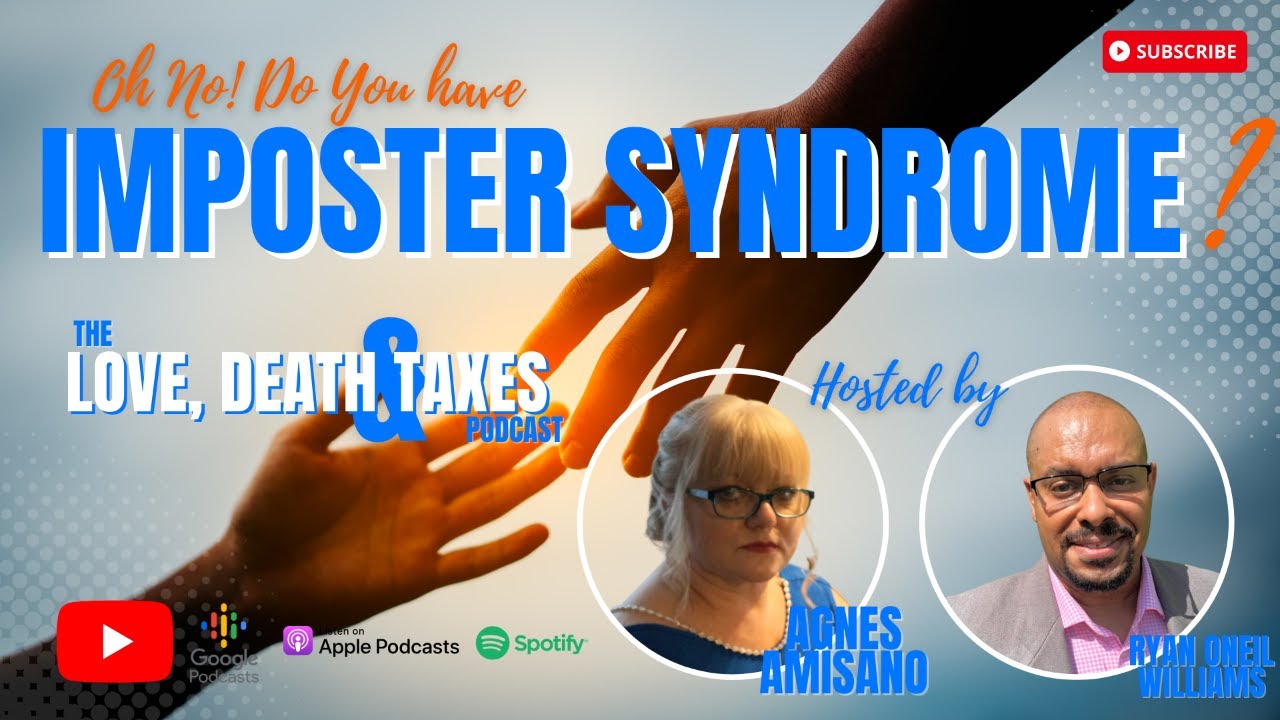
Agnes and Ryan discuss imposter syndrome: what it is and why it is not a formal diagnosis, how upbringing, comparison, perfectionism and life changes trigger it, and the five types (perfectionist, expert, natural genius, soloist and superhuman). They explain how it affects relationships and business owners, name famous people who report it, and close with practical ways to cope.
Takeaways
- Imposter syndrome is a pattern of persistent self-doubt, not a mental disorder, and it often shows up in high achievers.
- Ask yourself what you believe about yourself, whether you feel worthy of love as you are, and whether you must be perfect to be accepted.
- Take action, stop comparing, and share your feelings; success builds confidence and competence together.
Chapters
- 0:00 Welcome and the topic
- 1:08 A webinar that sparked this episode
- 3:17 How parenting and generation can contribute
- 3:48 It is not an actual syndrome
- 6:29 Ryan's funeral story and comparison
- 9:37 The five types of imposter
- 14:55 How it shows up in daily life
- 18:33 Triggers: comparison, culture, life changes
- 21:47 Talking to your partner about it
- 26:59 Three questions for self-reflection
- 31:44 How it affects business owners
- 37:01 Famous people who report feeling it
- 42:24 Awareness, advocacy and action
- 45:34 Practical tips to cope
More episodes: Love, Death & Taxes · all episodes